01
Reducing cognitive
load in a website
designed for ADHD.
Redisigning the digital experience
for Asociacion TDAH +16 Valencia
ROLE
UX/UI Designer
Team Lead
DURATION
1 month
6 sprints
SCOPE
Research
User testing
Accesibility
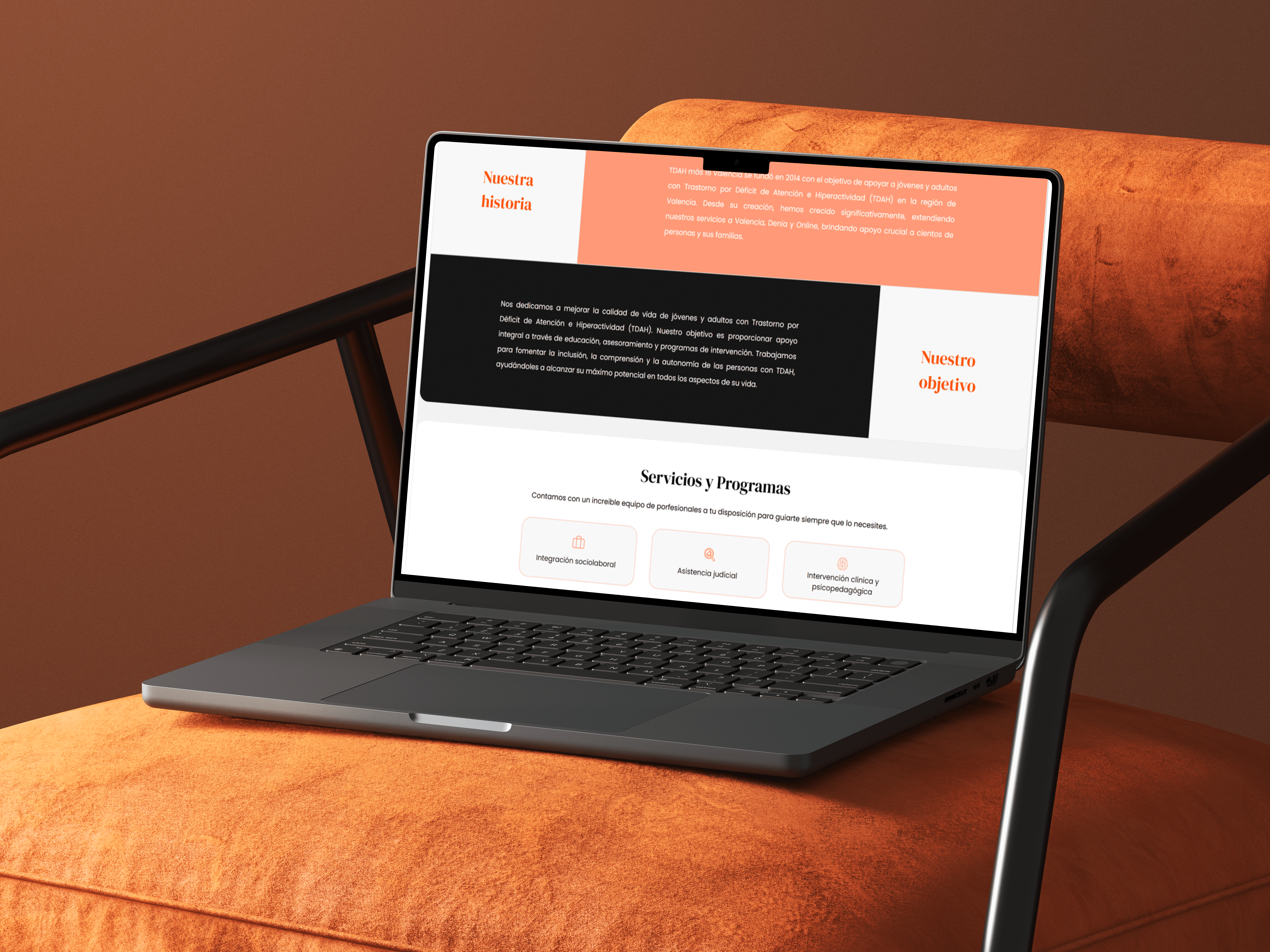
Overview
Context
TDAH+16 Valencia is a non-profit
organization that provides support,
information and resources for adults
with ADHD, their families and
professionals.
The Challenge
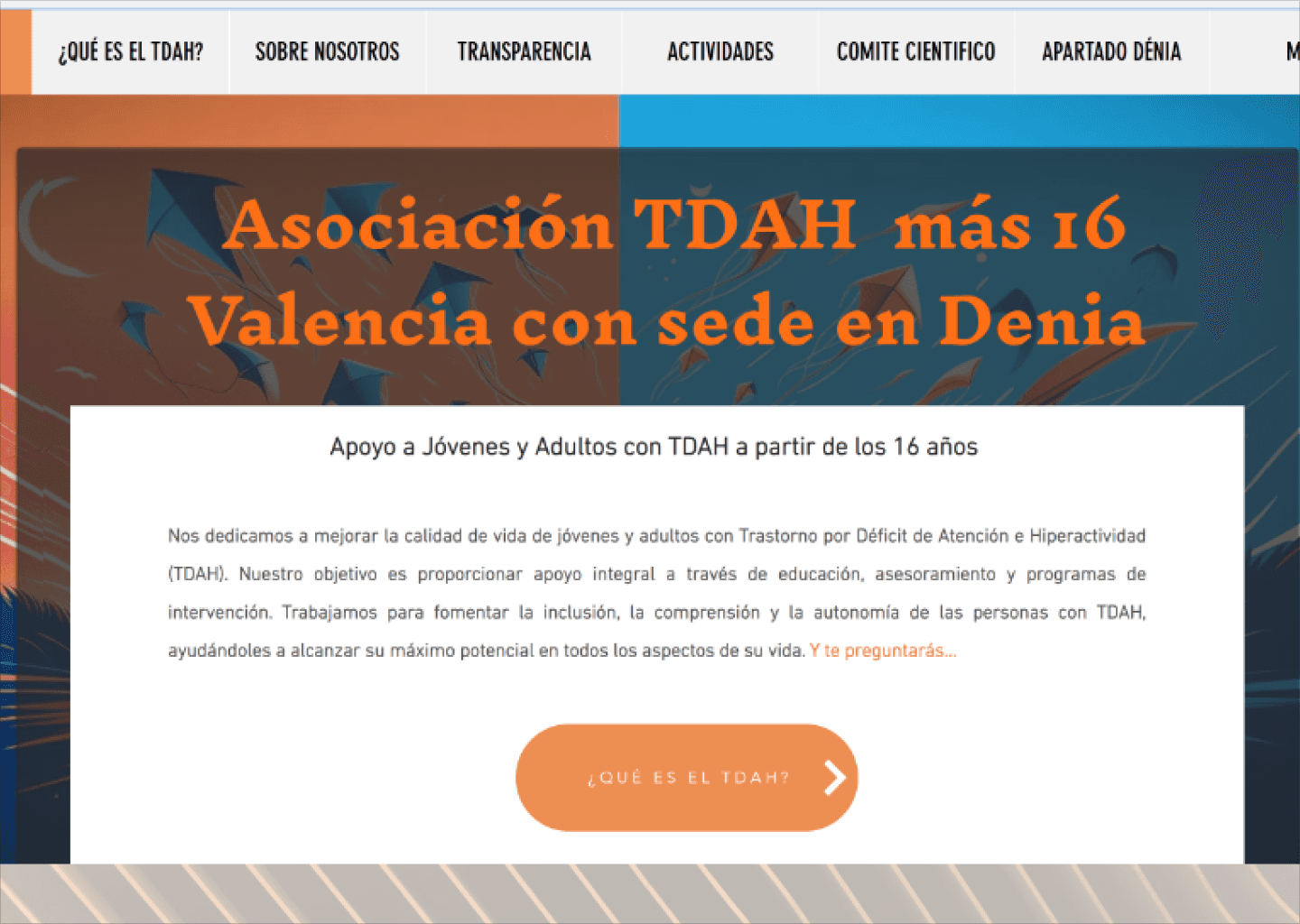
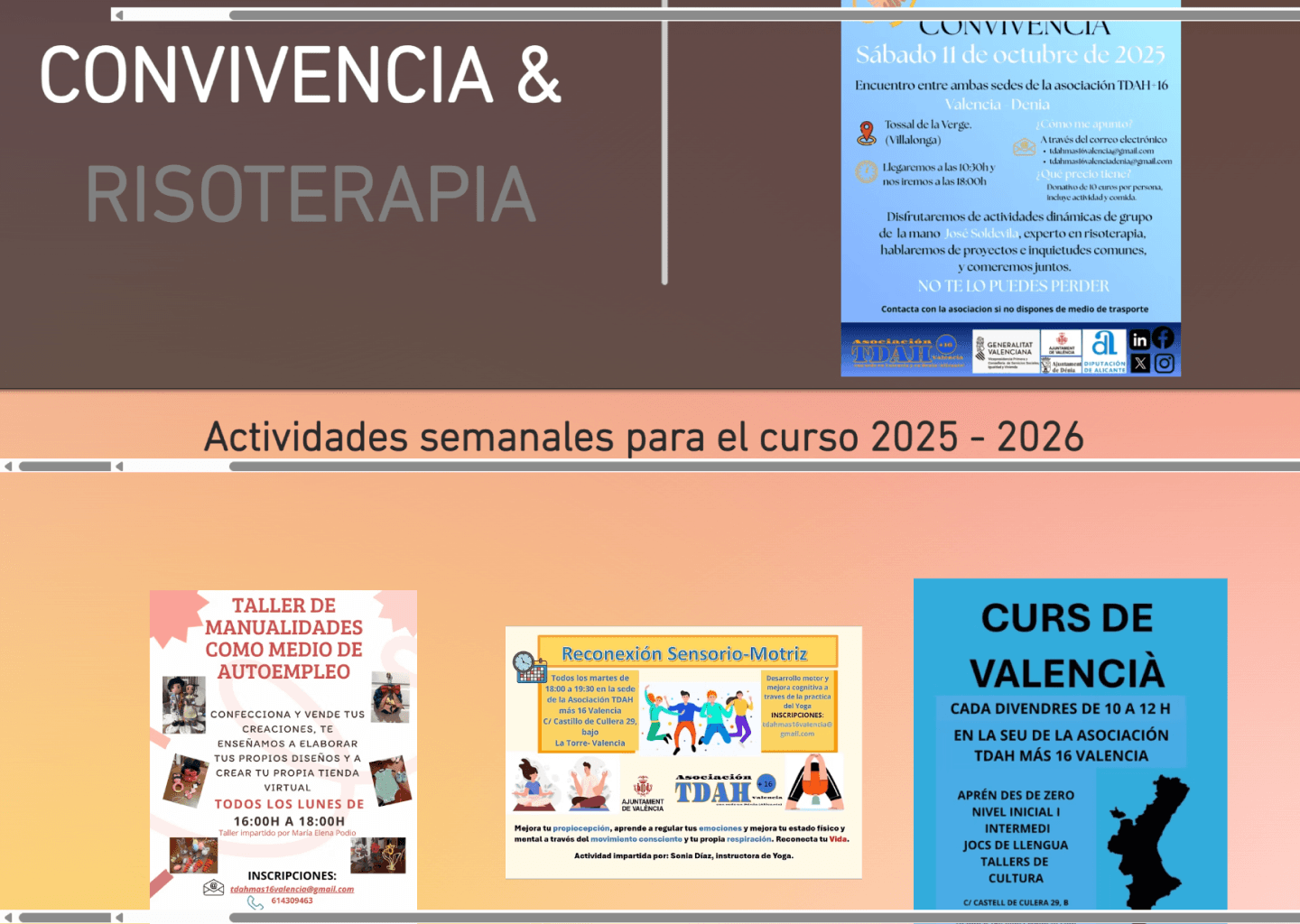
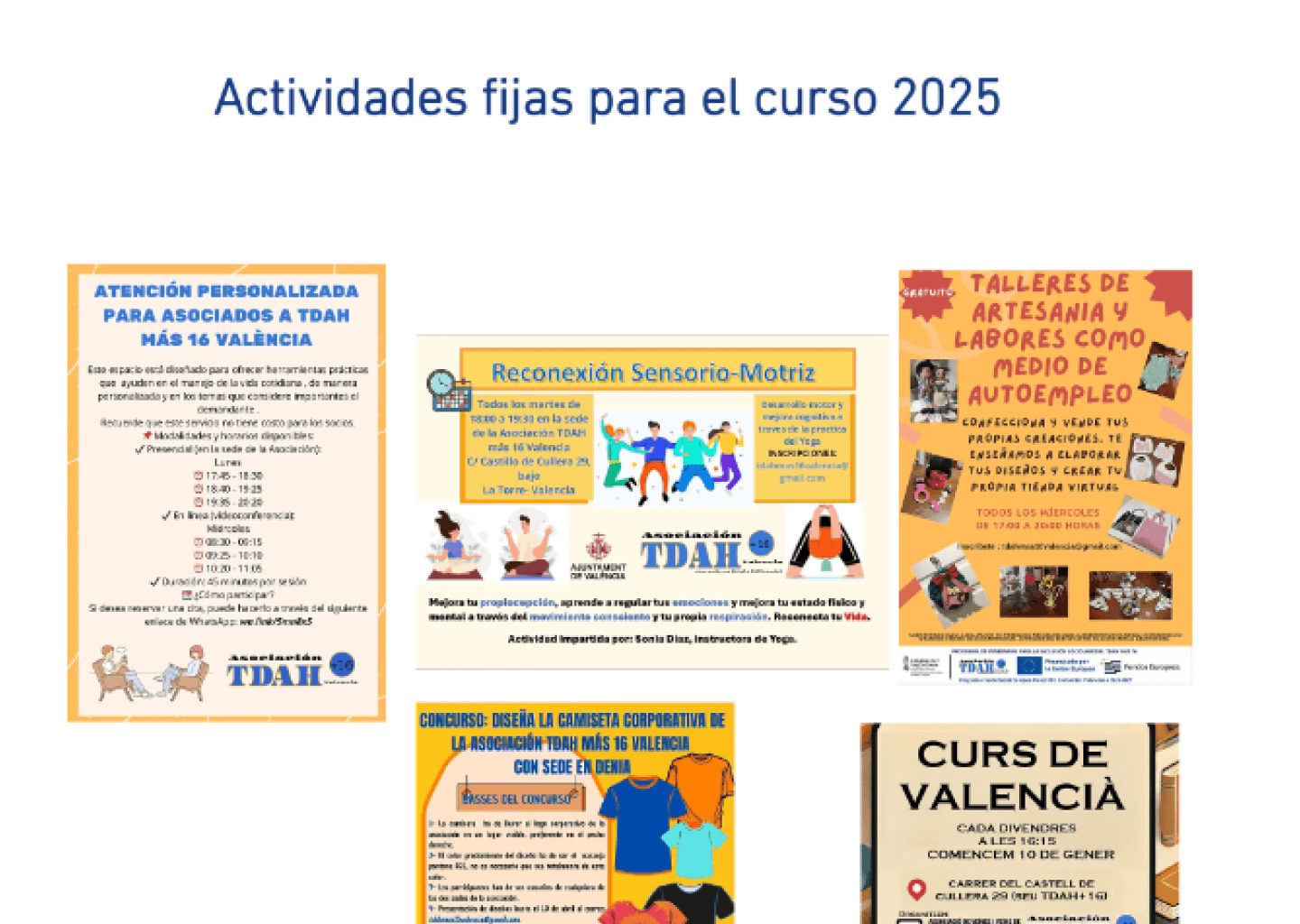
The existing website was difficult
to navigate, visually overwhelming
and did not consider the needs
of users with attention difficulties.
The Outcome
A clear, accessible and focused
digital experience that reduces
cognitive load and makes information
easy to find and understand.
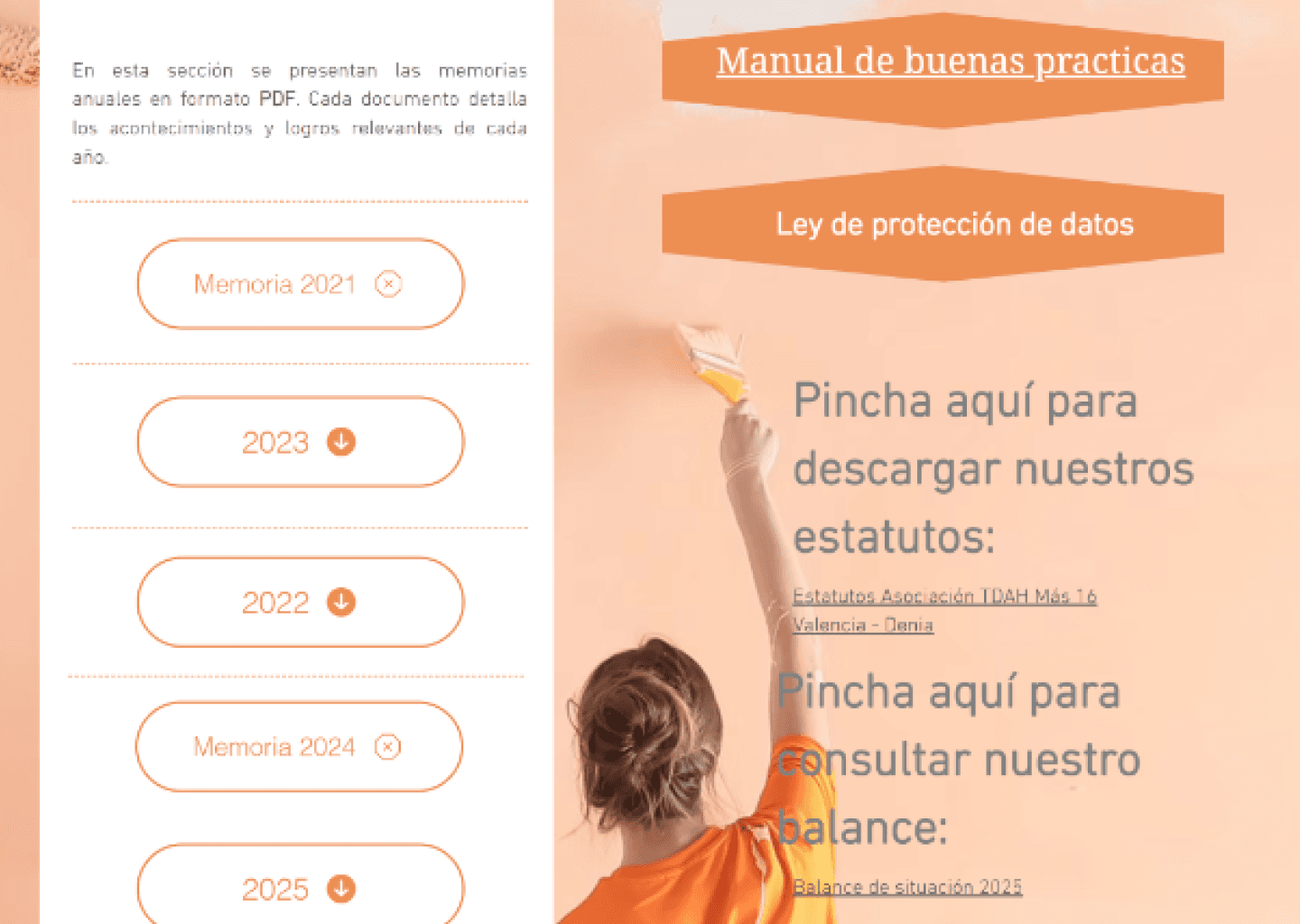
The Problem
The previous website made it difficult
for users to find what they needed
and stay focused.
Unclear navigation and structure
Too much text and visual noise
Poor readability and low contrast
Not accessible or ADHD-friendly


The Goal
Design a clear, accessible and
focused experience tailored to
the needs of ADHD users and their families.
Reduce
cognitive load
Simplify content
and visual hierarchy
Improve
navigation
Make information easy
to find and understand
Increase
accessibility
Follow WCAG guidelines
and ADHD best practices
Build trust
and empathy
Create a warm, inclusive
and human experience
The Process
A user-centered approach from
research to validation.
01.
Research
Simplify content
and visual hierarchy

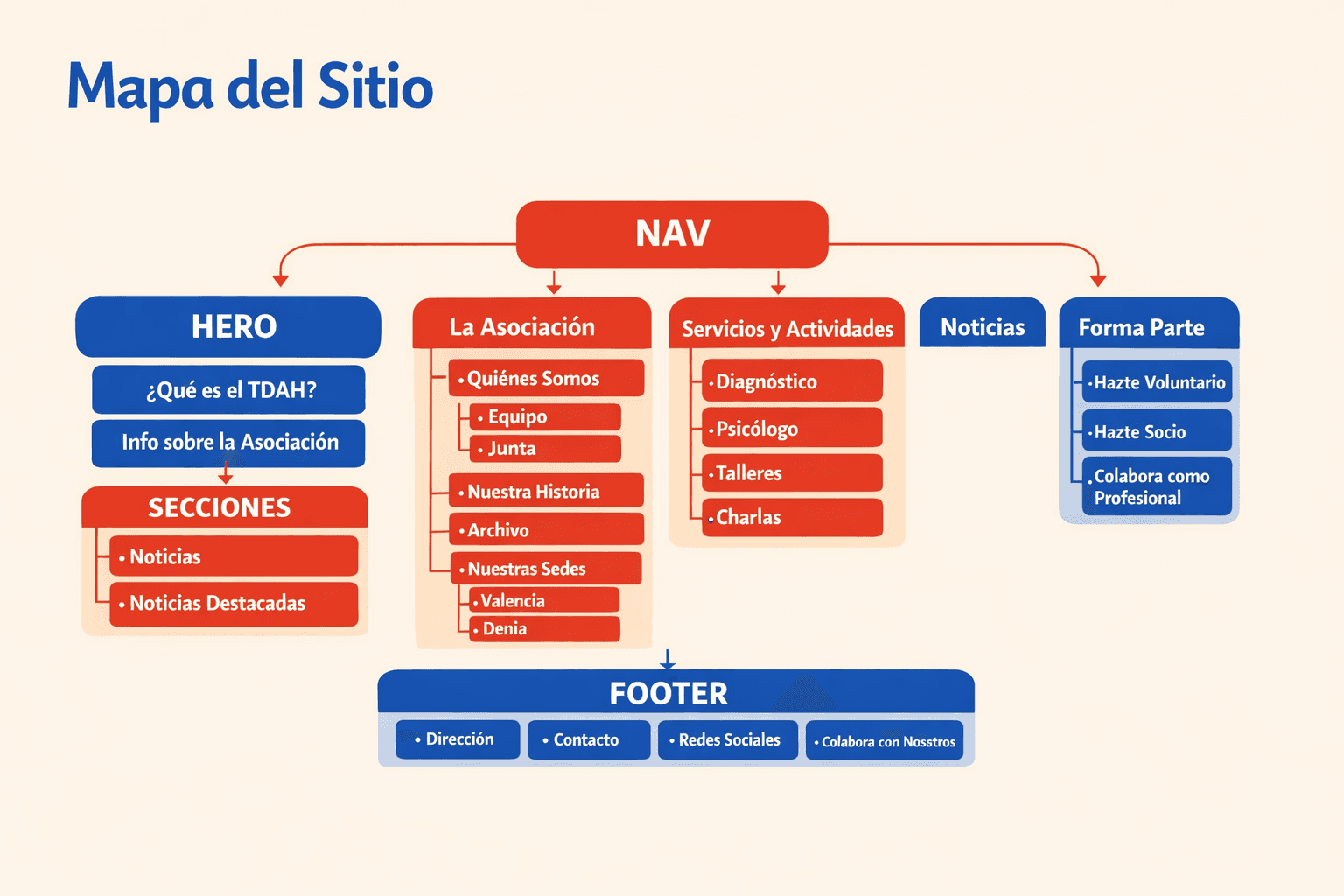
02.
Structure
Simplify content
and visual hierarchy
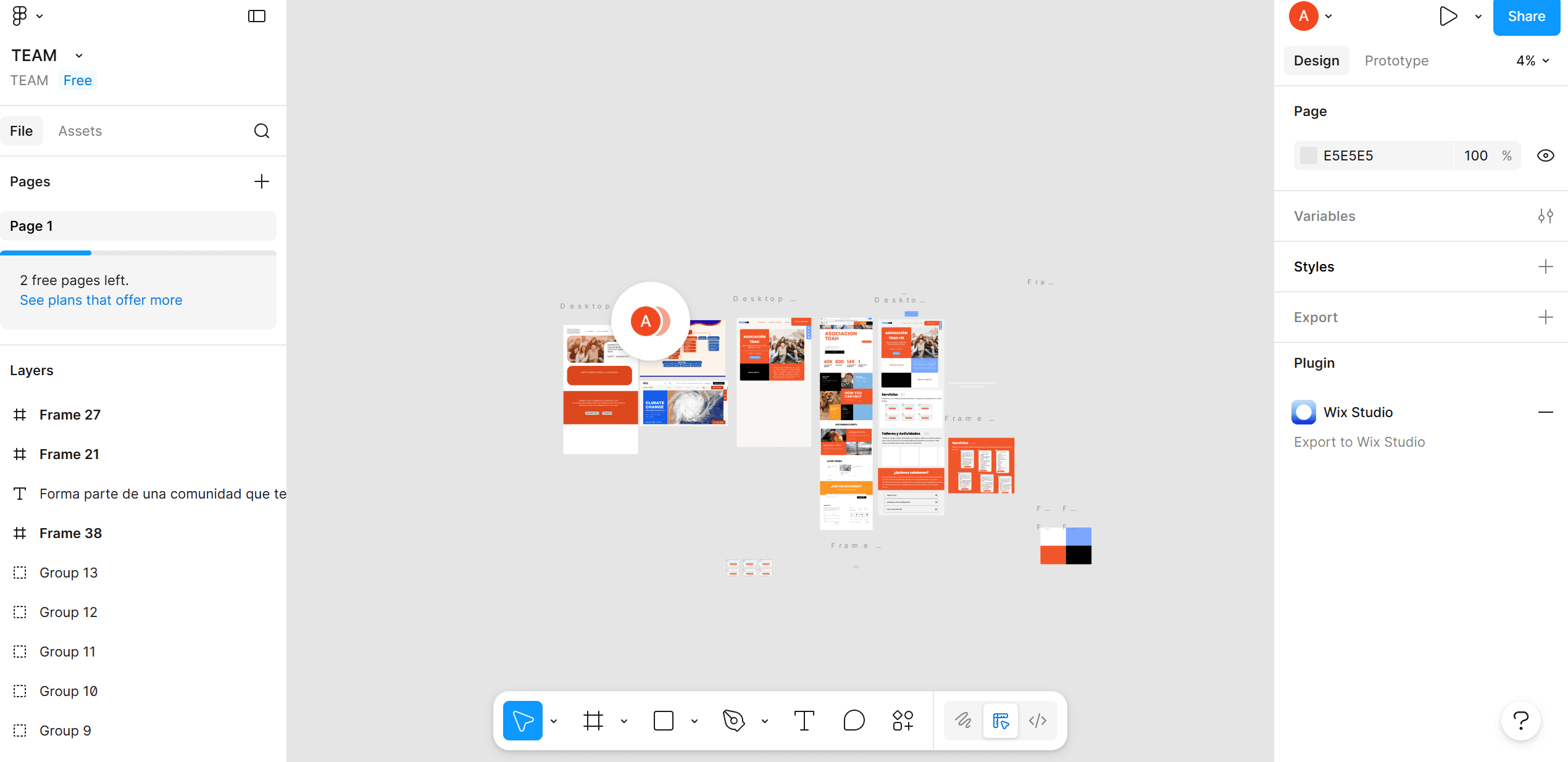
03.
Design
Simplify content
and visual hierarchy
04.
Testing
Simplify content
and visual hierarchy

The Design
A user-centered approach from
research to validation.
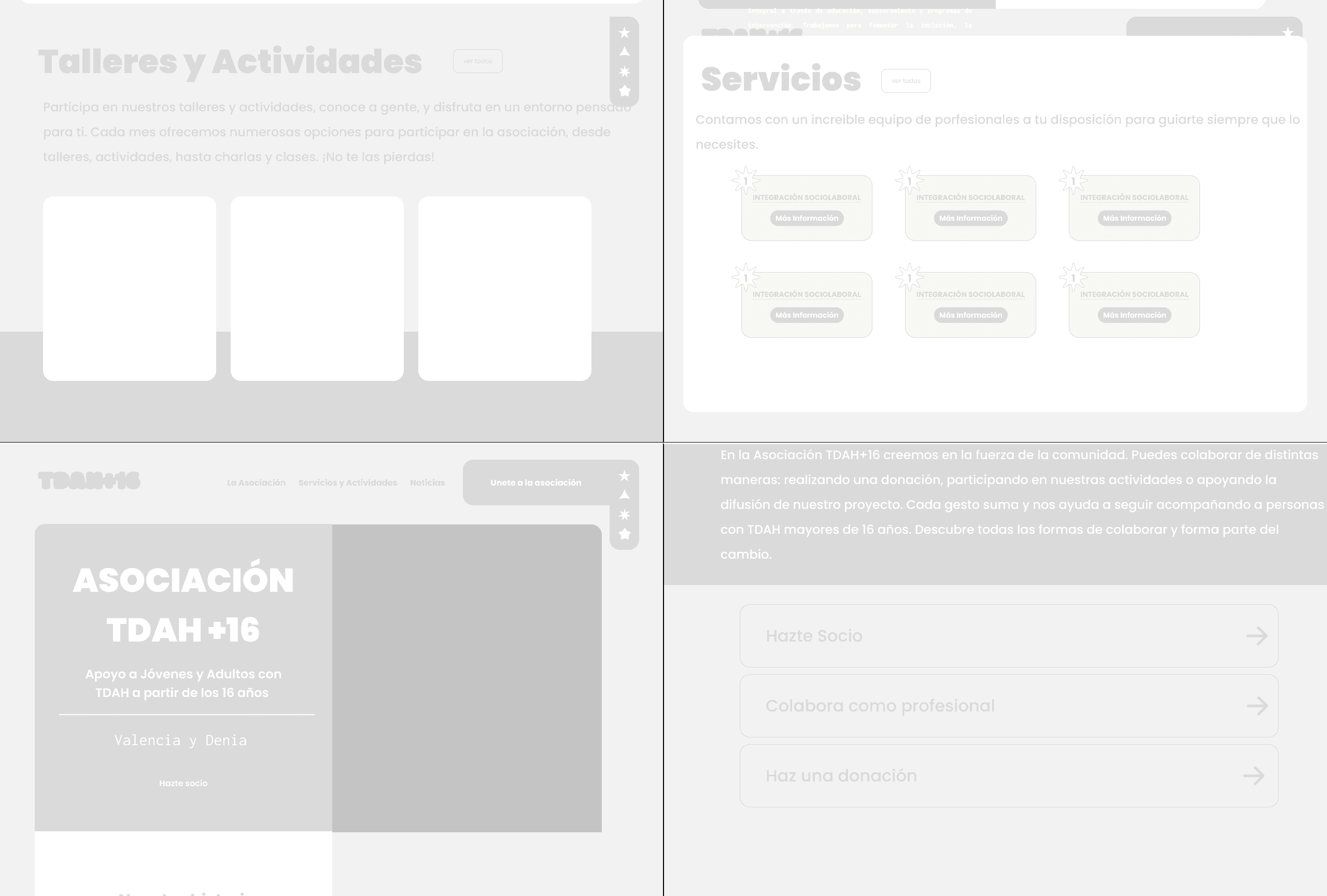
Wireframes
Low-fidelity wireframes
to test structure and content
hierarchy before visual design.
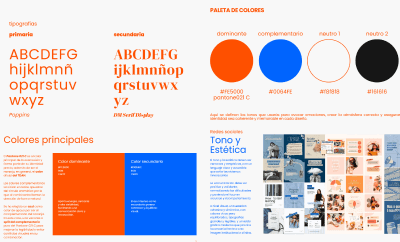
Design System
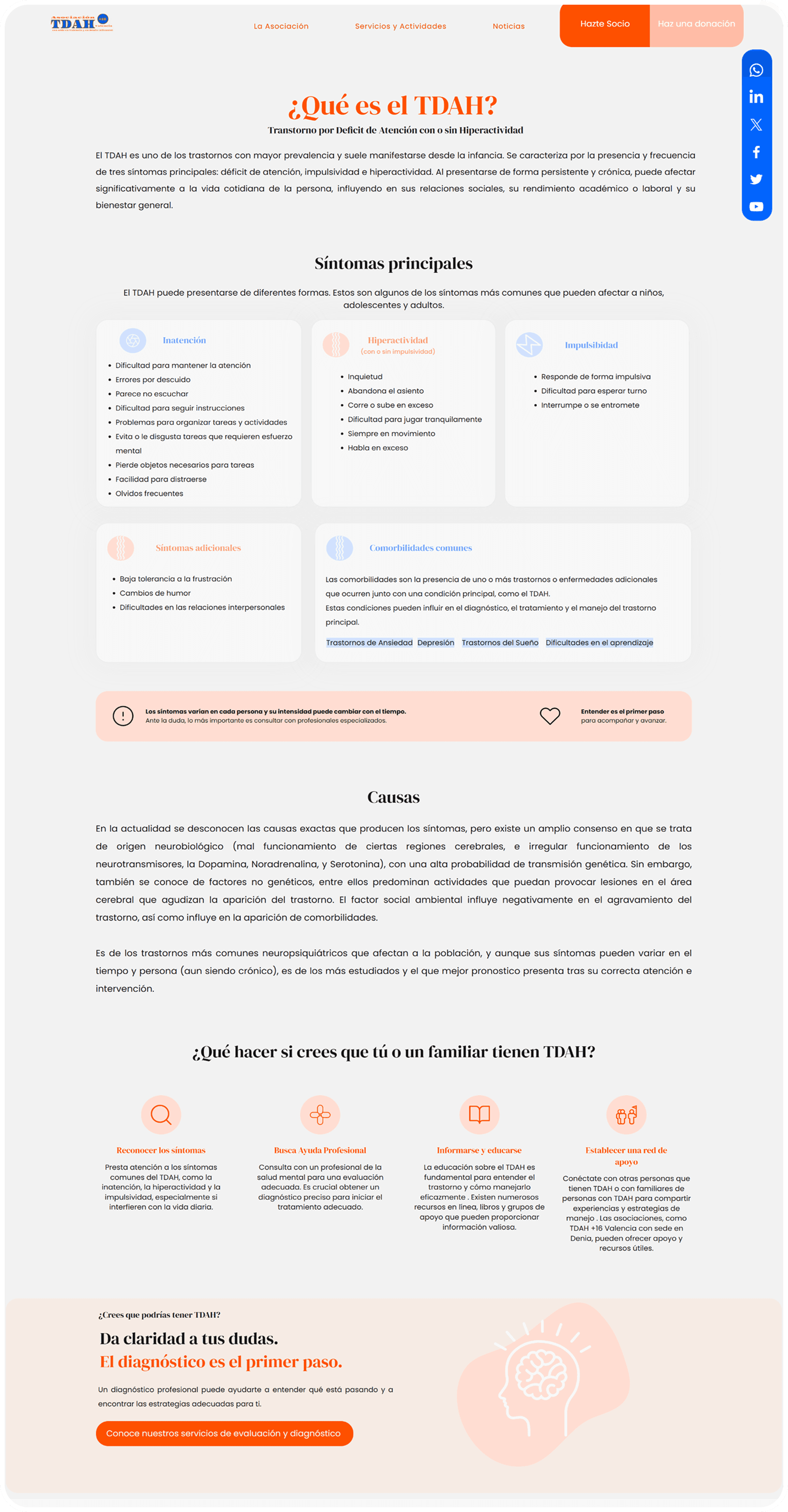
A consistent system using official
ADHD colors, readable typography
and accessible components.
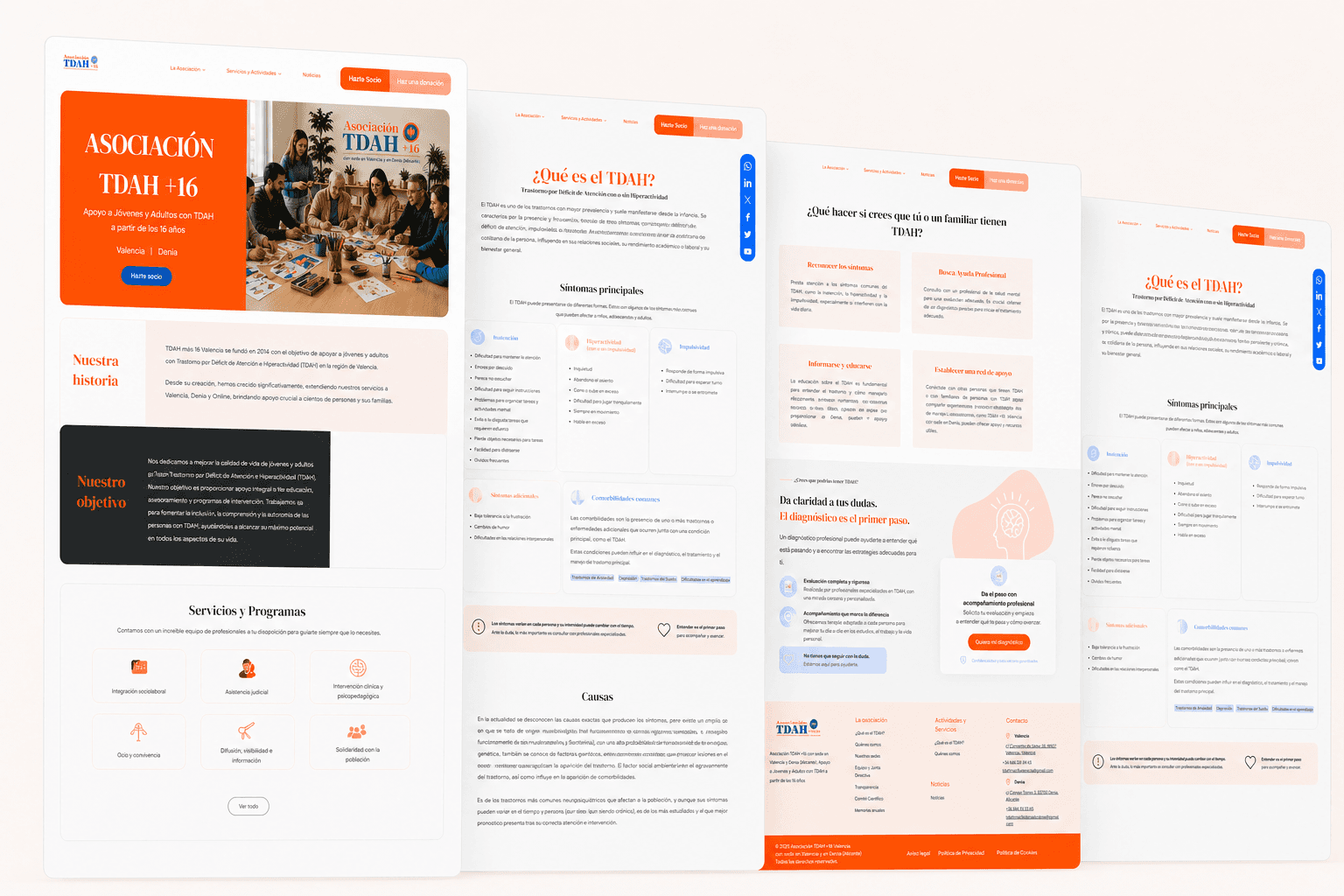
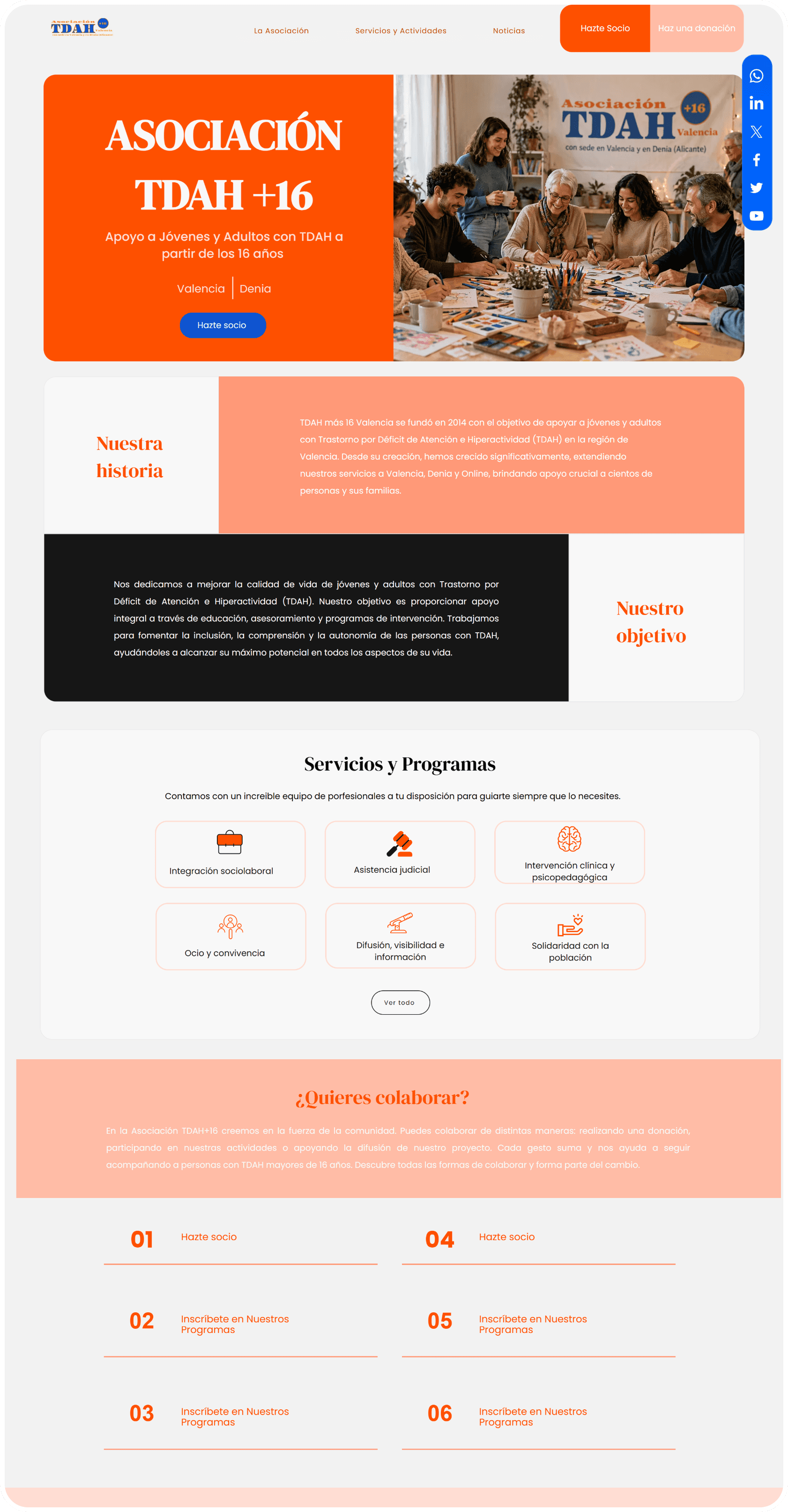
Final screens
A clean, focused and
friendly interface that
puts users and content first.
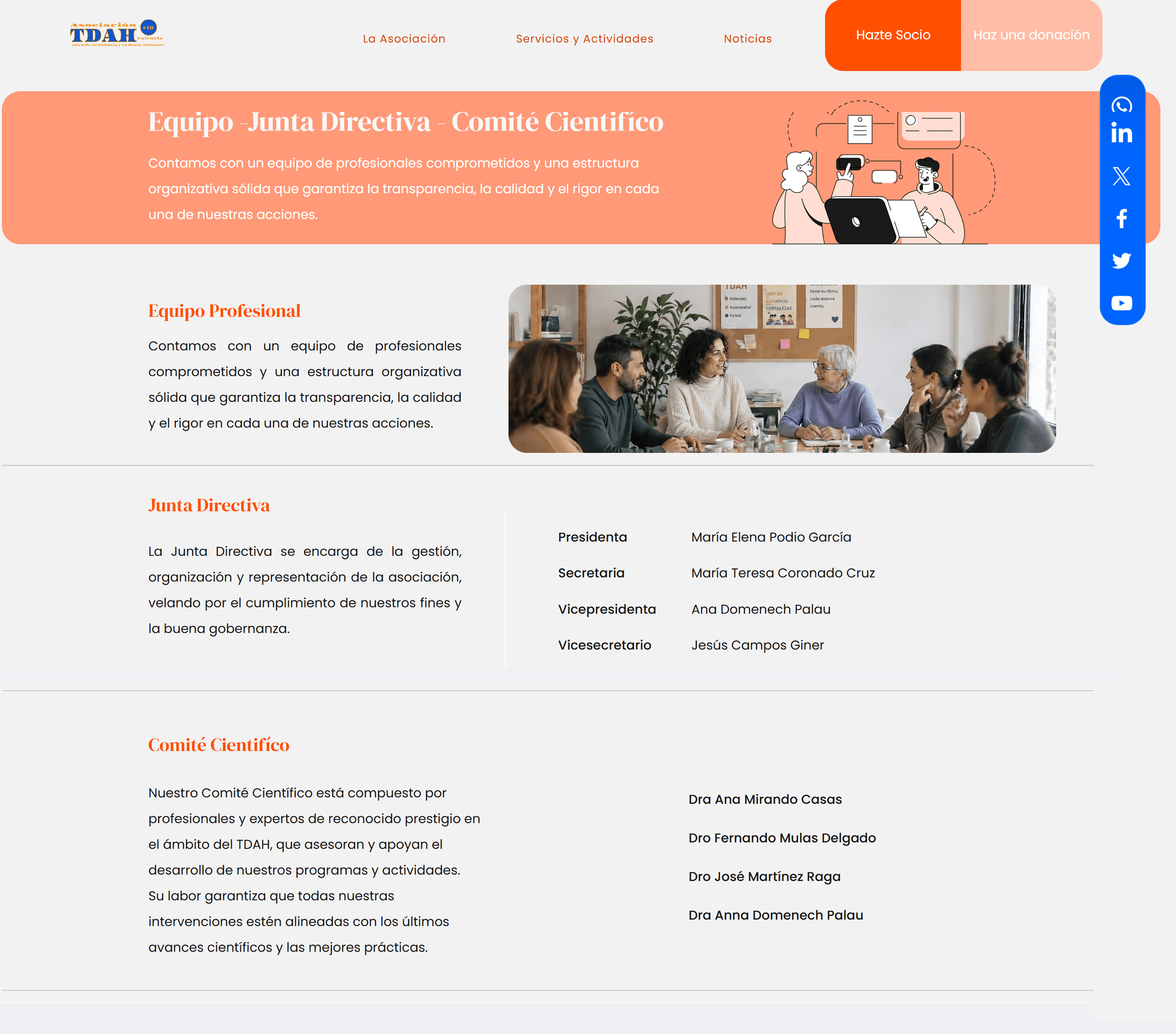
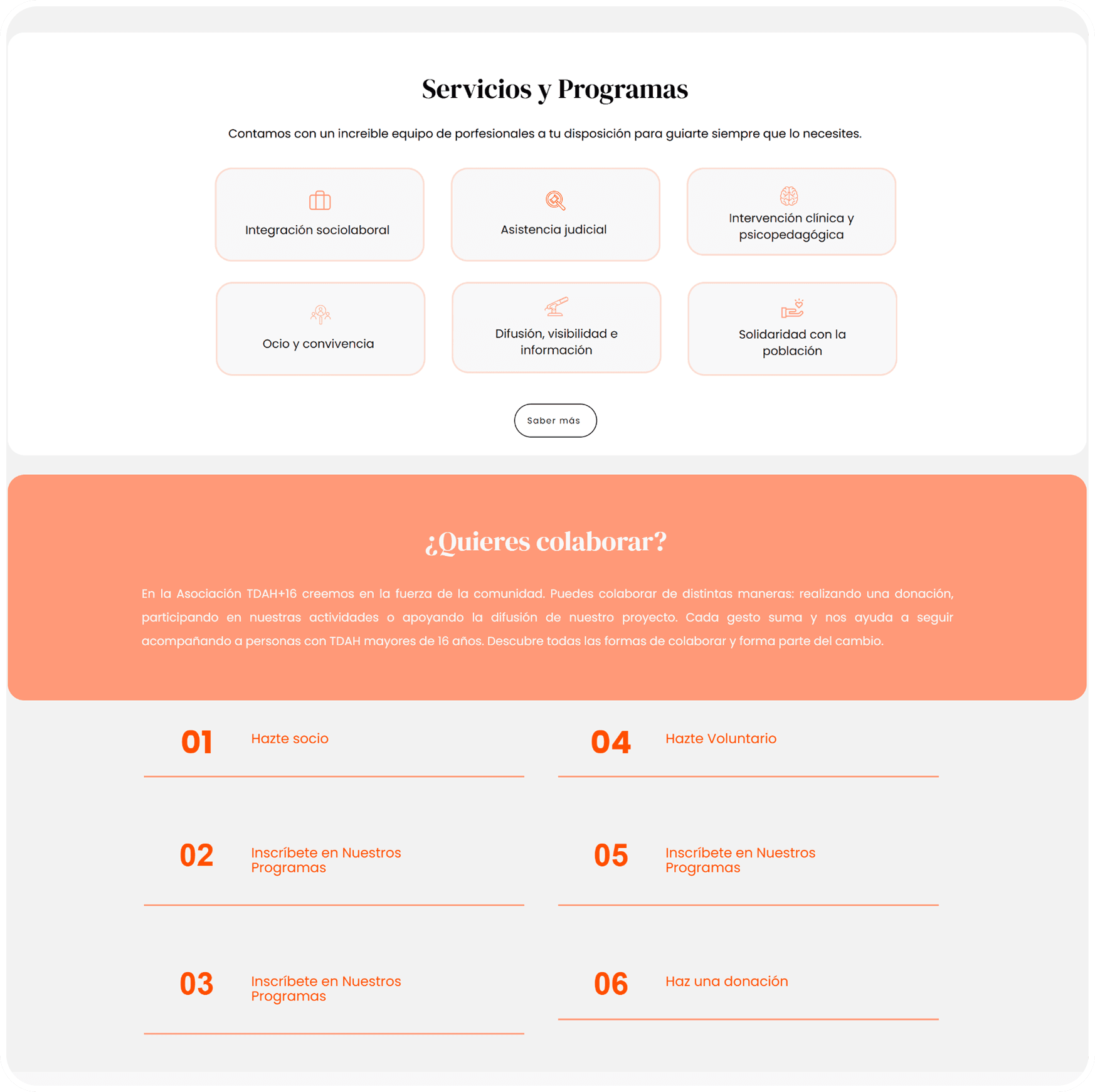
The Result
Impact
The redesign has a positive impact
on both users and the organization.
Lowering the abandonment rate,
and achieving new members.
More intuitive navigation
Reduced cognitive load
Improved accessibility (WCAG AA)
Stronger visual identity and trust
Takeaway
Designing for ADHD means designing
with attention, not against it.
Simplicity, clarity and empathy
are not just good practices
— they directly impact how people
understand and interact with digital
experiences.